

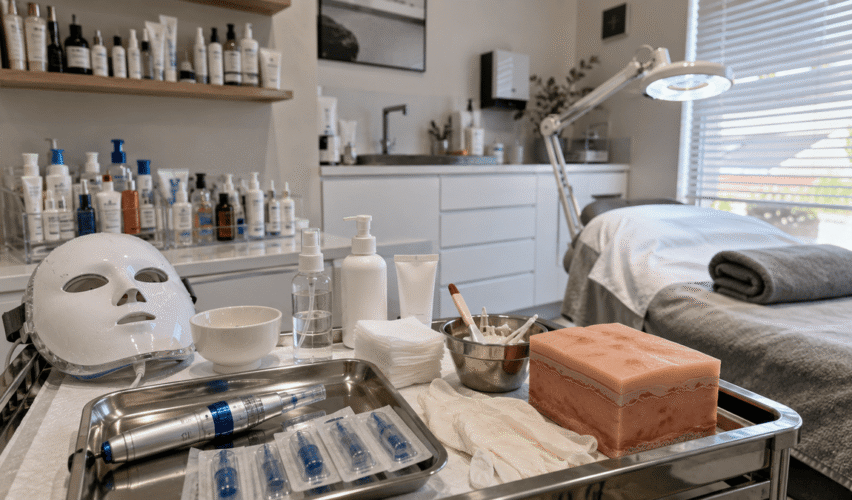
A crowded bathroom cabinet can contain cleansers, serums, exfoliants, masks and enough moisturiser to survive a minor drought. Yet even a consistent home skincare routine may not fully address concerns such as pigmentation, persistent breakouts, uneven texture, visible redness or early signs of ageing.
That is where Advanced Skin Treatments may become useful.
Rather than offering a temporary “freshly pampered” appearance, these professional treatments are generally designed to target specific skin concerns and support gradual improvements over time. However, they are not magic, instant or suitable for everyone.
So, are Advanced Skin Treatments worth it for long-term skin health? For many people, they can be, particularly when treatments are selected carefully, performed by a qualified professional and supported by sensible home care.
This guide explains what advanced treatments involve, how they may support healthier-looking skin, what affects their value and how to decide whether they fit your long-term skincare goals.
Quick Overview
At a Glance
Advanced Skin Treatments may be worthwhile when they are chosen for a clearly identified skin concern rather than selected because they are fashionable.
Key points include:
- They can target concerns that basic facials and skincare products may not fully address.
- Results usually develop gradually and may require a series of treatments.
- The best treatment depends on your skin condition, tolerance, lifestyle and goals.
- Professional assessment is important before beginning a treatment plan.
- Daily sunscreen and appropriate home care can influence how long results last.
- More expensive or more intense does not automatically mean more effective.
The real value usually comes from having the right treatment at the right time, not simply booking the most impressive-sounding option on a menu.
Want to understand whether Advanced Skin Treatments deserve a place in your routine? Keep reading.
What Are Advanced Skin Treatments?
Advanced Skin Treatments are professional procedures that go beyond basic cleansing, massage and moisturising. They are often designed to encourage skin renewal, improve hydration, refine texture or reduce the visible appearance of certain concerns.
Depending on the clinic, available treatments may include:
- Professional skin peels
- LED light treatments
- Microneedling
- Hydration-focused treatments
- Skin resurfacing procedures
- Treatments for congestion or breakouts
- Pigmentation-focused programs
- Non-invasive rejuvenation treatments
The word “advanced” does not necessarily mean aggressive. Some advanced treatments are gentle and progressive, while others involve more noticeable downtime.
A good provider should explain why a treatment is being recommended, what it is intended to achieve and what level of recovery or aftercare may be involved.
How Can Advanced Treatments Support Long-Term Skin Health?
Long-term skin health is not simply about removing every visible line or pore. Skin has pores. Humanity has spent enormous amounts of money being offended by this biological fact.
Healthy-looking skin is usually associated with balance, resilience, hydration, evenness and the ability to recover from everyday environmental stress.
Advanced treatments may support these goals in several ways.
Encouraging Controlled Skin Renewal
Some treatments are designed to remove or loosen damaged surface cells, allowing fresher-looking skin to become more visible.
This may help improve the appearance of:
- Rough texture
- Dullness
- Mild discolouration
- Congestion
- Uneven tone
The key word is controlled. Over-treating the skin can cause irritation and weaken its protective barrier, which is why professional guidance matters.
Supporting Collagen and Skin Structure
Treatments such as microneedling are often used to stimulate the skin’s natural repair response. Over time, this may help improve firmness and soften the appearance of certain lines or textural irregularities.
These changes generally do not happen overnight. Collagen-related improvements tend to develop gradually, making consistency more important than chasing instant transformation.
Improving Hydration and Barrier Support
Not every advanced treatment needs to involve needles, peeling or equipment that resembles something borrowed from a science-fiction film.
Some treatments focus on hydration and barrier support. These may be particularly helpful when the skin feels dry, tight, reactive or depleted.
A stronger skin barrier can help the skin retain moisture and tolerate environmental stress more effectively.
Creating a More Targeted Skin Plan
One of the biggest potential benefits of professional treatment is not the procedure itself. It is the assessment that comes before it.
A qualified skin professional may help identify whether a concern is related to dehydration, congestion, inflammation, sun exposure or another factor. This reduces the temptation to buy seven unrelated products because a stranger online had unusually persuasive lighting.
When Are Advanced Skin Treatments Worth the Investment?
Advanced Skin Treatments may be worth considering when you have a specific concern that has not improved through a sensible home routine.
They may offer value if:
- Your skin concerns have remained unchanged for several months.
- You are dealing with recurring congestion or breakouts.
- Pigmentation or uneven tone is affecting your confidence.
- You want to improve texture, hydration or overall skin quality.
- You are prepared to follow aftercare instructions.
- You understand that progress may require multiple sessions.
They may offer less value if you are booking treatments randomly, changing your routine every week or expecting one session to reverse years of sun exposure by Tuesday afternoon.
Consistency usually creates better results than intensity.
What Determines Whether a Treatment Works?
The effectiveness of Advanced Skin Treatments depends on several connected factors.
The Accuracy of the Skin Assessment
A treatment cannot address the real problem if the concern has been misunderstood.
For example, skin that appears oily may also be dehydrated. Pigmentation may have different triggers. Redness may require a cautious approach rather than aggressive exfoliation.
A proper consultation helps reduce guesswork.
The Suitability of the Procedure
Not every treatment is suitable for every skin type, skin tone or medical history.
A reputable provider should ask about:
- Current skincare products
- Medications
- Allergies
- Pregnancy or breastfeeding
- Previous reactions
- Recent sun exposure
- Existing skin conditions
This information is not pointless paperwork. It can affect treatment safety and suitability.
The Treatment Schedule
Some procedures work best as part of a planned series, while others may be scheduled occasionally for maintenance.
Having treatments too frequently may irritate the skin. Waiting too long between sessions may reduce momentum.
Your schedule should be based on how your skin responds, not on how enthusiastically someone wants to fill next month’s appointment calendar.
Home Care Between Appointments
Professional treatments and home skincare should work together.
A basic routine may include:
- A suitable cleanser
- Moisturiser
- Daily broad-spectrum sunscreen
- Targeted products recommended for your concern
Using too many active ingredients after a treatment can cause dryness or irritation. Sometimes the best aftercare strategy is remarkably boring, which is usually a sign that it is sensible.
Pro Tip: Sunscreen Protects Your Investment
Many advanced treatments aim to improve visible signs of sun damage, pigmentation or premature ageing.
Failing to use sunscreen afterwards is rather like repainting a wall and immediately throwing coffee at it.
Daily sun protection is especially important in Australia, where incidental UV exposure can occur during ordinary activities such as driving, walking the dog or sitting near a bright window.
Follow the aftercare advice provided by your treatment professional and avoid unnecessary sun exposure during recovery.
Quick Guide: When Your Skincare Routine Has Reached a Plateau
You have used a consistent routine for several months. Your skin feels reasonably clean and hydrated, but one or two concerns are not improving.
Common Challenges
- Does your pigmentation keep returning despite using targeted skincare?
- Does your skin still feel rough or congested?
- Are you buying stronger products without knowing whether they suit your skin?
How to Approach It
Book a professional skin consultation
Start with an assessment rather than selecting a treatment based only on its name or popularity.
Choose one clear goal
Focus on a priority such as hydration, texture, breakouts or pigmentation. Trying to address everything at once can make progress harder to assess.
Begin with a manageable plan
A gradual treatment schedule may help you understand how your skin responds before progressing to more intensive options.
Review your home routine
Remove products that may be causing irritation, duplication or unnecessary exfoliation.
Why It Works
This approach connects professional treatment with realistic goals and consistent home care. It also makes it easier to track whether the plan is actually helping rather than relying on hope, flattering bathroom lighting and selective memory.
Are There Risks or Downsides?
Advanced Skin Treatments can have potential side effects, particularly when they are poorly selected or performed incorrectly.
Depending on the procedure, temporary effects may include:
- Redness
- Dryness
- Flaking
- Sensitivity
- Mild swelling
- Temporary breakouts
- Changes in pigmentation
More intensive treatments may involve greater downtime and stricter aftercare.
The lowest price should not be the only deciding factor. Training, hygiene, consultation quality and treatment suitability are more important than saving a small amount on a procedure that interacts directly with your face.
People with active skin conditions, infections or complex medical histories should seek appropriate professional advice before undergoing treatment.
Mini Quiz: Are Advanced Skin Treatments Right for You?
Answer yes or no.
- Do you have a specific skin concern you want to address?
- Have you followed a consistent home routine for at least several weeks?
- Are you willing to follow treatment aftercare instructions?
- Do you understand that results may be gradual?
- Are you prepared to attend a professional consultation first?
Your Result
Four or five yes answers:
You may be ready to explore Advanced Skin Treatments with a qualified provider.
Two or three yes answers:
A professional skin consultation could help clarify your goals before you commit.
Zero or one yes answer:
You may benefit from simplifying and stabilising your home skincare routine first.
This quiz is a general guide, not a diagnosis or treatment recommendation.
How to Choose a Skin Treatment Provider
A trustworthy provider should be willing to explain the treatment without hiding behind complicated terminology.
Before booking, consider asking:
- What concerns is this treatment designed to address?
- Why is it suitable for my skin?
- What results are realistic?
- How many sessions may be required?
- Is there downtime?
- What are the possible side effects?
- What should I avoid before and after treatment?
- Who will perform the procedure?
- What qualifications or training do they have?
Be cautious if a provider guarantees dramatic results, pressures you into a package immediately or recommends a treatment without properly examining your skin.
Professional confidence should feel informative, not theatrical.
Frequently Asked Questions
How often should you have Advanced Skin Treatments?
The ideal frequency depends on the procedure, your skin condition and your treatment goals.
Some gentle treatments may be performed regularly, while more intensive procedures may require several weeks or months between sessions. Your provider should create a schedule based on your response rather than applying the same timetable to every client.
Are advanced treatments better than skincare products?
Not necessarily. They serve different purposes.
Home skincare supports the skin every day, while professional treatments may offer more targeted intervention. The best long-term strategy often combines both.
Treatments cannot compensate for an unsuitable daily routine.
How quickly will results appear?
Some treatments may improve hydration or brightness relatively quickly. Changes involving texture, pigmentation or skin structure may take longer and require multiple appointments.
Progress should be assessed through consistent photographs and professional reviews rather than checking the mirror every twelve minutes.
Can people with sensitive skin have advanced treatments?
Possibly, but treatment selection must be cautious.
Sensitive or reactive skin may benefit from gentle, barrier-supportive approaches rather than strong resurfacing procedures. A patch test or gradual treatment plan may be recommended.
Are Advanced Skin Treatments suitable for all ages?
There is no universal “correct” age to begin.
Treatment should be based on the condition and needs of the skin, not simply a person’s age. Younger clients may seek help for congestion or breakouts, while others may focus on pigmentation, dryness or visible ageing.
How can you make treatment results last longer?
Long-term results are often supported by:
- Daily sunscreen
- Consistent home care
- Avoiding excessive exfoliation
- Attending recommended reviews
- Managing sun exposure
- Maintaining realistic treatment intervals
Conclusion
Advanced Skin Treatments can be worthwhile for long-term skin health when they are based on proper assessment, realistic expectations and consistent care. Their value does not come from dramatic names, expensive equipment or promises of instant perfection. It comes from choosing treatments that suit your skin and support a clear long-term goal.
For Australian clients dealing with pigmentation, texture, breakouts, dehydration or visible ageing, professional treatments may provide support beyond a standard home routine. The safest starting point is a thorough skin consultation, followed by a personalised plan that balances professional treatment, sensible skincare and daily sun protection.