

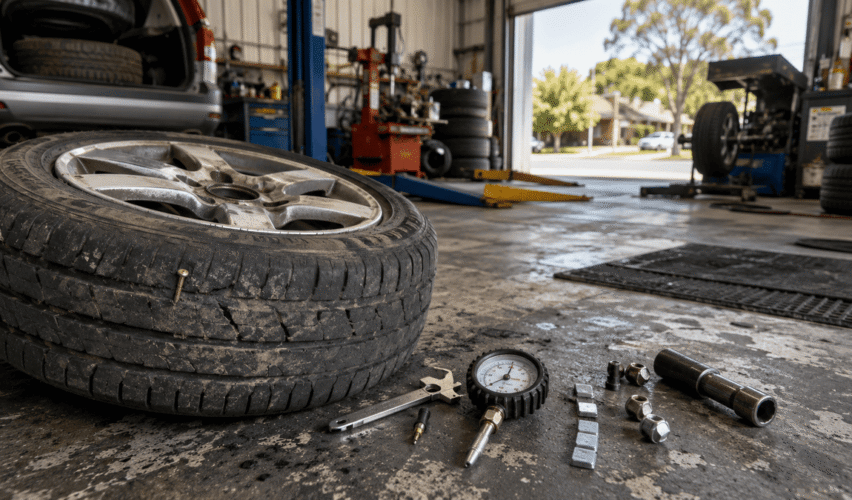
Visiting a tyre shop can feel surprisingly uncertain, especially when you are not sure whether your vehicle needs a puncture repair, wheel alignment, tyre rotation or a complete set of new tyres. You may also wonder how long the appointment will take, what the technician will inspect and whether you will understand the recommendations.
This guide explains what to expect when visiting a tyre shop, from the initial conversation and tyre inspection to selecting replacements and completing the final safety checks. It is designed to help Australian drivers arrive prepared, ask useful questions and make informed decisions without needing to become overnight tyre experts.
At a Glance
A typical visit to a tyre shop may include:
- Discussing your vehicle, driving habits and tyre concerns
- Inspecting tyre tread, pressure, sidewalls and wear patterns
- Checking whether a puncture can be repaired safely
- Recommending suitable replacement tyres when required
- Fitting and balancing new tyres
- Checking wheel alignment where uneven wear is present
- Explaining tyre maintenance and future replacement needs
A professional tyre shop should clearly explain what your vehicle needs, why it is recommended and how much the work will cost before proceeding.
Want to understand each stage in more detail? Keep reading.
The Initial Conversation
Your visit will usually begin with a few questions from the tyre technician. This is not an interrogation, although it may feel like your car is being asked to account for its recent behaviour.
The technician may ask:
- What type of vehicle do you drive?
- Have you noticed vibrations, pulling or steering changes?
- Is a tyre losing pressure?
- Do you mainly drive in the city, on highways or on unsealed roads?
- How often do you carry heavy loads?
- Are you looking for budget, mid-range or premium tyres?
These questions help the tyre shop understand how your vehicle is used. A tyre that suits a small car driven around suburban streets may not be appropriate for a four-wheel drive regularly travelling through regional Australia.
Be honest about your driving habits and budget. The most expensive tyre is not automatically the best option for every driver.
The Tyre Inspection
Before recommending a repair or replacement, the technician should inspect your existing tyres.
The inspection may include checking:
- Tread condition: Low or uneven tread can reduce traction, particularly on wet roads.
- Tyre pressure: Incorrect pressure may affect handling, fuel use and tyre wear.
- Sidewalls: Cracks, cuts, bulges or impact damage may make a tyre unsafe.
- Puncture location: Some punctures can be repaired, while others require replacement.
- Wear patterns: Uneven wear may indicate alignment, suspension or inflation problems.
- Tyre age and condition: A tyre may appear usable while showing signs of deterioration.
The technician may also inspect the spare tyre. It tends to spend years quietly hiding in the boot, only to reveal that it has no air when you need it most.
Pro Tip: Ask the technician to show you any damage or unusual wear. Seeing the problem can make the recommendation much easier to understand.
Can the Tyre Be Repaired?
Not every flat tyre needs to be replaced. In some situations, a tyre shop may be able to repair a puncture safely.
Repair suitability depends on factors such as:
- The location of the puncture
- The size and type of damage
- Whether the tyre was driven while flat
- The overall condition of the tyre
- Whether previous repairs have been completed
Damage close to the sidewall or shoulder of the tyre may not be safely repairable. Sidewall bulges, deep cuts and structural damage will generally require replacement.
A responsible tyre shop should prioritise safety rather than promising to repair every damaged tyre. Sometimes the least exciting answer—“this tyre needs replacing”—is also the correct one.
Choosing New Tyres
When replacement is necessary, the tyre shop should recommend options that match your vehicle specifications, driving conditions and budget.
You may be shown several choices, including:
- Budget tyres: Suitable for drivers seeking an affordable replacement for ordinary use
- Mid-range tyres: Often balance cost, comfort, durability and performance
- Premium tyres: May offer advanced wet-weather grip, reduced road noise or specialised performance
- All-terrain tyres: Designed for a combination of sealed and unsealed driving
- Performance tyres: Intended for vehicles requiring enhanced handling and responsiveness
Do not choose tyres based only on price. Ask about tread life, road noise, wet-weather performance, warranty conditions and suitability for your usual driving.
Did You Know?
Two tyres with the same dimensions can behave differently because of differences in tread design, rubber compounds and construction. Correct size matters, but it is not the only consideration.
What Happens During Tyre Fitting?
Once you approve the tyres and price, the fitting process can begin.
A typical fitting service includes:
- Removing the wheels from the vehicle
- Taking the old tyres off the rims
- Inspecting the rims and valves
- Installing the replacement tyres
- Inflating them to the recommended pressure
- Balancing each wheel
- Refitting the wheels and tightening the wheel nuts correctly
Wheel balancing helps distribute weight evenly around the wheel and tyre assembly. Poor balance can cause vibration, particularly at higher speeds, and may contribute to uneven wear.
Depending on the number of tyres being fitted and how busy the tyre shop is, you may be invited to wait or return when the vehicle is ready.
Will You Need a Wheel Alignment?
Tyre fitting and wheel alignment are related services, but they are not the same.
A wheel alignment adjusts the angles of the wheels so they meet the road correctly. It may be recommended when:
- The vehicle pulls to one side
- The steering wheel sits off-centre
- The tyres show uneven wear
- You have recently hit a pothole or kerb
- Suspension or steering components have been replaced
- New tyres are being installed after irregular wear
An alignment can help protect your new tyres from wearing unevenly. There is little joy in buying fresh tyres only to watch one edge disappear much faster than the rest.
Quick Guide: Preparing for an Unexpected Tyre Problem
Imagine noticing that one tyre looks lower than the others before your morning commute. You are unsure whether it has a puncture, whether it is safe to drive or how much the repair might cost.
Common Challenges
- Is the tyre safe enough to drive to the tyre shop?
- Will the tyre need repair or complete replacement?
- How can you avoid agreeing to unnecessary work?
How to Handle It
Check the pressure carefully
Use a tyre pressure gauge where available. If the tyre is severely deflated or visibly damaged, avoid driving on it.
Call the tyre shop first
Explain the symptoms and ask whether the vehicle should be driven, fitted with the spare or transported using roadside assistance.
Request an inspection before approval
Ask the technician to identify the cause and explain whether the tyre is repairable.
Confirm the total price
Check whether the quote includes fitting, balancing, disposal, valves and any additional services.
Why This Works
Taking a few careful steps helps prevent further tyre damage and reduces the risk of making a rushed decision. It also allows the tyre shop to prepare for your arrival and recommend the safest next step.
Experiencing pressure loss or visible tyre damage? Arrange an inspection before the problem becomes a roadside surprise.
Questions to Ask at the Tyre Shop
You do not need technical knowledge to ask useful questions. Consider asking:
- Why are you recommending this tyre?
- Is my existing tyre repairable?
- Does the price include fitting and balancing?
- Should I replace two tyres or all four?
- Do I need a wheel alignment?
- What pressure should I use?
- Is there a manufacturer or workmanship warranty?
- When should I return for a tyre rotation or pressure check?
A trustworthy tyre shop should answer these questions clearly and without making you feel as though you have accidentally entered a Formula One engineering meeting.
Quick Tyre Check Quiz
Answer yes or no:
- Does your vehicle vibrate at certain speeds?
- Does it pull left or right on a straight road?
- Are you regularly adding air to one tyre?
- Can you see cracking, cuts or bulges?
- Is the tread noticeably lower on one edge?
- Has it been a long time since your tyres were professionally checked?
Your Result
- Zero “yes” answers: Your tyres may be behaving normally, but regular pressure and condition checks remain important.
- One or two “yes” answers: Consider arranging a tyre shop inspection soon.
- Three or more “yes” answers: Book an inspection promptly, particularly if you notice pressure loss, vibration or visible damage.
This quiz is a general guide and does not replace a professional safety inspection.
Frequently Asked Questions
How long does a tyre shop appointment take?
The timeframe depends on the work required, the number of tyres and the shop’s workload. A simple inspection or puncture assessment may be relatively quick, while fitting multiple tyres and completing an alignment will take longer.
Ask for an estimated completion time when booking.
Should I book before visiting?
Booking is generally helpful, particularly when you need several tyres fitted or want a wheel alignment. Some tyre shops also accept walk-in customers for punctures and urgent inspections.
Calling ahead can confirm:
- Tyre availability
- Appointment times
- Expected service duration
- Whether your preferred tyre brand or size is in stock
Do I need to replace all four tyres?
Not always. The correct decision depends on tyre condition, wear levels, vehicle type and manufacturer requirements.
Replacing tyres in pairs may be appropriate in some cases. Vehicles with particular drivetrain systems may have additional requirements, so ask the technician what is suitable for your vehicle.
Can I bring tyres purchased elsewhere?
Some tyre shops will fit customer-supplied tyres, while others may not. Labour charges, warranty coverage and responsibility for unsuitable or damaged tyres can also differ.
Confirm the shop’s policy before arriving.
Conclusion
Visiting a tyre shop should be a straightforward process built around inspection, explanation and safe recommendations. The technician will usually discuss your concerns, assess the tyres, explain whether repair or replacement is required and complete services such as fitting, balancing or alignment.
Arriving with a few questions and a basic understanding of the process can help you compare options confidently. Pay attention to pressure loss, unusual vibration, steering changes and visible tyre damage rather than waiting for a flat tyre to make the decision for you. Most importantly, choose a tyre shop that explains the work clearly and puts vehicle safety ahead of unnecessary extras.