

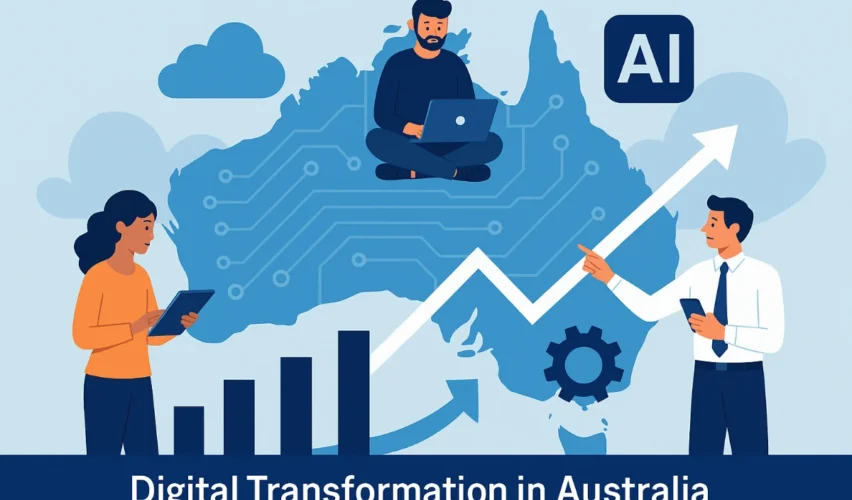
In Australia, the phrase digital transformation often gets tossed around like a footy on grand final day. Everyone talks about it, but not everyone knows how to catch it. From small cafes in Melbourne rolling out online ordering apps to big banks in Sydney upgrading cybersecurity systems, Digital Transformation in Australia is happening everywhere, reshaping how we live, work, and even how we pay for our morning flat white.
But here’s the kicker: while “going digital” sounds trendy, it’s not just about having a website or throwing a chatbot on your page. It’s about using technology to improve services, cut costs, and create better experiences for Australians.
This post lays out a roadmap for success in digital transformation, breaking down what it means, why it matters, and how businesses (and individuals) can embrace it. We’ll sprinkle in expert insights, add a few laughs, and even give you a quiz to test if you’re digitally ready.
Snapshot Summary (At a Glance)
- Digital Transformation in Australia is about integrating technology into all areas of business and society.
- It’s driven by cloud computing, AI, automation, cybersecurity, and data analytics.
- Key sectors transforming include healthcare, finance, retail, education, and government services.
- Challenges: cost, skills shortages, and resistance to change.
- Success requires leadership, training, and customer-focused strategies.
Want to future-proof your business and lifestyle? Keep reading—we’ve mapped the journey.
What Is Digital Transformation in Australia?
At its core, digital transformation is more than just “digitisation” (aka turning paper into PDFs). It’s about rethinking how you operate.
Examples in Australia:
- MyGov services shifting online, making it easier to file taxes (well, easier-ish).
- Retailers like Woolworths and Coles expanding online shopping and delivery.
- Telehealth booming after COVID-19 made “waiting rooms” virtual.
Digital transformation = better service, more efficiency, and stronger competitiveness.
Why It Matters for Australians
- Economic Growth – Australia’s digital economy is forecast to be worth $315 billion by 2030.
- Workforce Evolution – Digital skills are now essential in almost every job.
- Accessibility – Rural and remote Australians benefit from online healthcare and education.
- Sustainability – Digital tools reduce waste and improve energy efficiency.
“Australia’s future prosperity will depend on how well we embrace digital technologies.” – Australian Digital Economy Strategy
Quick Guide: Digital Transformation in Practice
Situation
A small business in Brisbane still uses paper invoices and a landline phone.
Common Challenges
- “We don’t have the budget for big tech.”
- “Our staff aren’t tech-savvy.”
- “Customers still like it the old way.”
How to Solve It
✔ Start Small – Use affordable tools like Xero or MYOB for accounting.
✔ Train Staff – Invest in short online courses (many are subsidised).
✔ Go Cloud-Based – Switch to Google Workspace or Microsoft 365.
✔ Focus on Customers – Add online booking or payment options.
Why It Works
Digital tools free up time, reduce costs, and improve customer experience—making businesses more competitive.
Key Trends Driving Digital Transformation in Australia
1. Cloud Computing
Cloud adoption is booming, letting businesses scale without heavy IT investment.
2. Artificial Intelligence (AI)
From chatbots answering customer queries to AI-driven marketing campaigns, AI is reshaping industries.
3. Cybersecurity
With great digital power comes great hacking risk. Cybersecurity is now a must-have, not a nice-to-have.
4. Data Analytics
Businesses use big data to understand consumer behaviour (yes, they know how many lattes you ordered last week).
5. Automation
Robotic process automation (RPA) is helping companies cut repetitive tasks and boost efficiency.
Humor Break: Aussie Digital Life
- Your Wi-Fi drops during a Zoom meeting, but everyone just assumes you live in regional Australia.
- Forgetting your myGov password and going through the seven stages of grief to reset it.
- When your parents finally learn to use FaceTime… but call you every 10 minutes.
Sectors Leading the Way
Healthcare
Telehealth and digital health records are giving Australians better, faster access to care.
Finance
Banks lead in adopting AI, digital wallets, and blockchain for secure payments.
Retail
Online shopping exploded, with Afterpay making “just browsing” a dangerous phrase.
Education
Universities are offering hybrid learning and digital campuses.
Government
Digital identity and online service portals are cutting down queues (sorry, Centrelink).
Interactive Quiz: Is Your Business Digitally Ready?
Q1: Do you store important data in the cloud?
- A. Yes
- B. No
- C. What’s the cloud?
Q2: Do you accept online payments?
- A. Yes
- B. No
- C. We still take cheques.
Q3: Do your employees have digital upskilling opportunities?
- A. Yes
- B. No
- C. They know how to reboot the Wi-Fi, isn’t that enough?
(Answers: Mostly A’s – You’re on track! Mostly B’s or C’s – Time to upgrade before your competitors leave you behind.)
FAQs: Digital Transformation in Australia
1. Is digital transformation expensive?
Not necessarily. Many tools are affordable, especially for SMEs. Government grants also help.
2. Who benefits the most from digital transformation?
Everyone—from big corporations to small businesses, employees, and customers.
3. What’s the biggest challenge in Australia?
The digital skills gap. Demand for IT professionals is outpacing supply.
4. Does digital transformation mean job losses?
Some roles may be automated, but new roles in AI, cybersecurity, and data analysis are growing.
5. How can individuals prepare?
Upskill through online courses, embrace digital tools, and stay adaptable.
Expert Insight
“Digital transformation isn’t optional—it’s survival. The companies that embrace it will thrive; those that resist will fade.” – Australian Business Council
Long-Term Outlook for Digital Transformation in Australia
- AI Integration – More automation across industries.
- Government Support – Expanded grants and digital strategies.
- Workforce Upskilling – Focus on STEM and digital literacy.
- Global Competitiveness – Ensuring Australian businesses can compete internationally.
Australia’s digital roadmap is clear—adapt now, or risk falling behind.
Conclusion
Digital Transformation in Australia is more than a buzzword. It’s a necessary shift that impacts businesses, governments, and individuals alike. From AI to cloud computing, embracing technology helps Australia stay competitive, resilient, and future-ready.
Whether you’re a small business owner, a corporate manager, or just someone tired of waiting in line at Centrelink, the message is the same: get on board with digital transformation. Because the future isn’t waiting, and neither should you.
Disclaimer
This article is for general informational purposes only. It does not constitute financial, business, or legal advice. For personalised advice, consult a qualified professional or relevant government agency.